The Power of Saying Thank You in Close Relationships
October 15, 20264 min read
We say thank you to strangers all the time. The cashier who hands us our change. The person who holds the door. The waiter who brings the food. Yet with the people closest to us, our partners, parents, children and best friends, those two small words often disappear.
It is not that we stop feeling grateful. We just stop saying it. The things our loved ones do become part of the background. The coffee is always made. The bills are always paid. The car is always filled with gas. Over time, these acts of care become invisible.
Bringing gratitude back into close relationships is one of the easiest and most powerful changes you can make.
Why gratitude matters so much
Researchers who study relationships have found that couples who regularly express gratitude tend to feel more satisfied and more committed. Gratitude seems to work like a kind of glue. It makes people feel valued, which makes them want to keep giving.
When someone feels appreciated, they are more likely to notice and appreciate you in return. A cycle begins. Kindness leads to thanks, which leads to more kindness. On the other hand, when people feel taken for granted, they often pull back. They give less, resent more and slowly drift away.
Notice the ordinary
The first step toward more gratitude is simply noticing. For one day, try to pay attention to everything your partner or family does that makes your life easier. You might be surprised how long the list gets.
They took out the trash. They picked up groceries. They listened to you vent about work. They let you sleep in. They remembered your appointment. These small things are easy to miss, but they are acts of love.
Be specific
A general 'thanks for everything' is nice, but specific thanks lands deeper. 'Thank you for cooking dinner tonight. I was so tired, and it really helped.' 'I really appreciated how patient you were with my mom on the phone.'
Specific gratitude shows that you truly noticed. It tells the other person exactly what made a difference, which makes them feel seen.
Thank people for who they are
Gratitude does not have to be only about tasks. You can also thank people for their qualities. 'I'm grateful for how funny you are. You always make bad days better.' 'Thank you for being so honest with me, even when it's hard.'
These kinds of thank-yous can be even more meaningful, because they celebrate the person, not just what they do.
Write it down
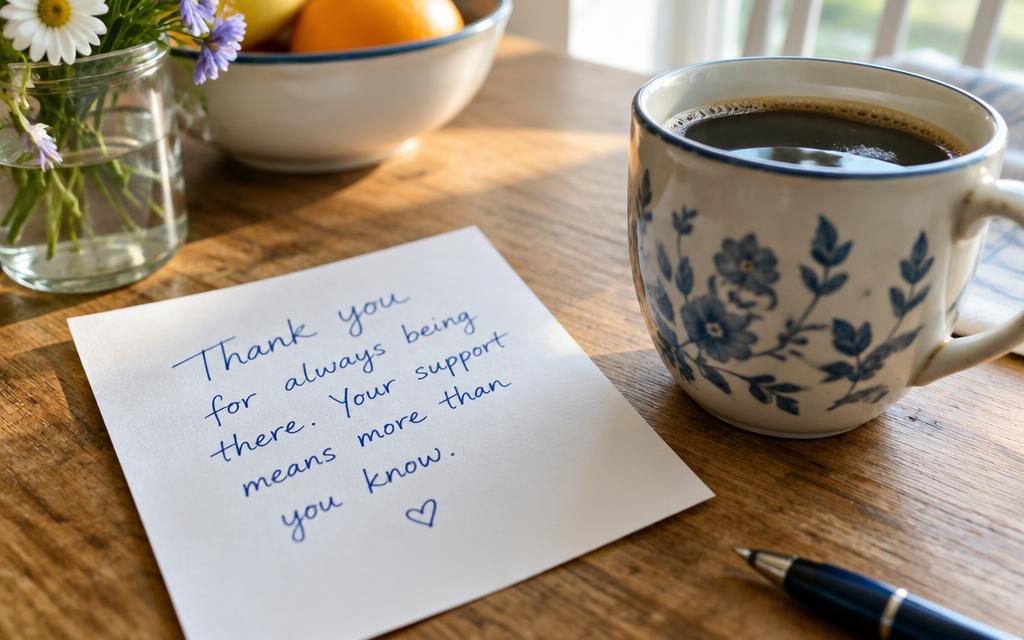
Sometimes it is easier to express gratitude in writing. A note in a lunchbox. A text in the middle of the day. A card on an ordinary Tuesday. Written thanks can be kept and reread, especially on hard days.
Some couples and families keep a gratitude jar, where everyone writes notes of thanks and reads them together at the end of the month or year. It can become a lovely tradition.
Gratitude during hard times
It is easy to feel grateful when life is going well. It is harder during stressful times, illness or conflict. But this is often when gratitude matters most.
Even in a difficult season, try to notice small things. 'Thank you for sitting with me at the hospital.' 'Thank you for staying calm while I was panicking.' These words can be a lifeline when everything else feels heavy.
Receiving thanks well
Gratitude is a two-way street. When someone thanks you, try not to brush it off. Instead of 'It was nothing,' try 'You're welcome, I was happy to do it.' Receiving thanks warmly encourages the other person to keep expressing it.
Make it a habit
Like any habit, gratitude gets easier with practice. Some people like to share one thing they are grateful for about each other every evening. Others set a reminder on their phone. Find something that fits your life.
Start today. Think of one person close to you and one thing they did recently that you appreciated. Then tell them. It might take ten seconds, but it could change the whole feeling of your day, and theirs.
A final thought
Good communication is not about finding perfect words. It is about staying in the conversation, even when it is uncomfortable, and caring enough to try again when you get it wrong. Most of us learn this slowly, with plenty of mistakes along the way.
Be patient with yourself and with the people you love. Practice one small skill at a time. Over weeks and months, those small changes add up, and you may find that the conversations you used to dread become the ones that bring you closest.
Most importantly, remember that the person across from you is not your opponent. You are two people trying to understand each other with imperfect words and tired minds. When you hold onto that truth, even difficult conversations become chances to build trust, and small misunderstandings stop growing into big ones.
Keep reading
If this story helped, you may also like our deeper guides: How to Communicate Better in a Relationship and How to Stop Overthinking in a Relationship.