Relationships in the Social Media Age: Connected but Lonely?
April 28, 20264 min read
We have never been more connected. With a few taps, we can see what an old school friend had for breakfast, watch a cousin's vacation in real time and message someone on the other side of the world. And yet, many studies suggest that people feel lonelier than ever.
Social media has changed how we form and keep relationships. In some ways, it has made life richer. In others, it has quietly made things harder. Understanding both sides can help us use these tools in ways that bring us closer, not further apart.
The good side
Let's start with what social media does well. It helps people stay in touch across distance. Families spread across countries can share photos every day. Old friends can reconnect after years apart. People with rare interests or experiences can find communities that understand them.
For some people, especially those who are shy, disabled or isolated, online spaces offer a real lifeline. They can find friendship and support that might be very hard to find in their local area.
The comparison trap
One of the biggest downsides of social media is comparison. We see other people's highlight reels, the vacations, the perfect couple photos, the beautiful homes, and compare them to our ordinary, messy lives. It is easy to feel like everyone else is happier and more successful.
This comparison can affect relationships too. You might see another couple's romantic anniversary post and suddenly feel disappointed in your own relationship. You might wonder why your partner does not do grand gestures like that.
It helps to remember that social media is a curated version of life. People rarely post their fights, their boring evenings or their bad days. The couple with the perfect photos might be struggling behind the scenes.
Presence versus attention
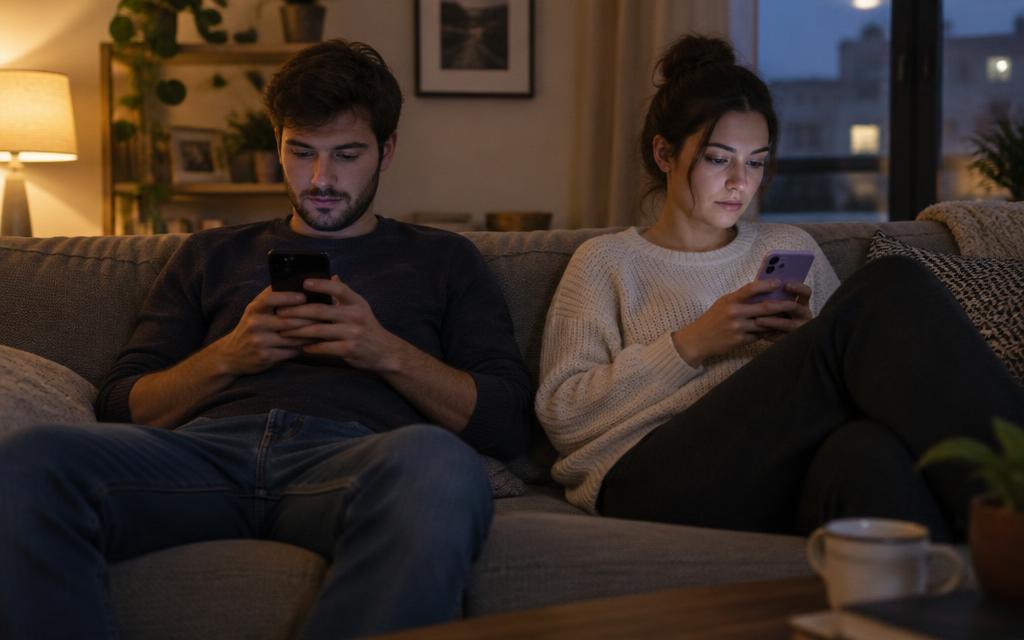
Another challenge is that phones pull our attention away from the people in front of us. Many of us have experienced sitting with a partner or friend while they scroll, or catching ourselves checking our phone in the middle of a conversation.
This has a name: phubbing, a mix of phone and snubbing. Studies have linked it to lower relationship satisfaction. When someone is constantly on their phone, the people around them can feel unimportant.
Simple habits can help. Put phones away during meals. Keep them out of the bedroom. Agree on phone-free times with your partner or family. These small choices can make a big difference in how connected you feel.
Jealousy and suspicion
Social media can also create new sources of jealousy. Who is your partner following? Who liked their photo? Who are they messaging? These small things can trigger insecurity and arguments.
Couples can benefit from talking about social media openly. What feels okay? What feels uncomfortable? Is it fine to follow exes? To message people privately? There is no single right answer, but agreeing on some shared expectations can prevent a lot of misunderstandings.
Shallow versus deep connection
Social media makes it easy to have many shallow connections. You can have hundreds of followers and still have no one to call when you are sad. Likes and comments can feel nice, but they cannot replace real conversation and physical presence.
Deep relationships need time, attention and vulnerability. They need phone calls, long talks, shared meals and showing up when it matters. Social media can support these relationships, but it cannot replace them.
Using it well
So how can we use social media in a way that helps our relationships? A few ideas might help.
Use it to start real contact, not replace it. If you see a friend's post about a hard time, send a private message or call them instead of just leaving a heart emoji.
Curate your feed. Follow accounts that make you feel inspired or connected, and unfollow ones that leave you feeling worse about yourself.
Notice how you feel after scrolling. If you often feel lonely, jealous or anxious, it might be time to cut back.
Share honestly. If you feel comfortable, post real moments, not just perfect ones. Honesty can invite deeper connection.
Finding balance
Social media is not good or bad on its own. It is a tool. Like any tool, it depends on how we use it. When it helps us stay close to people we love, it is wonderful. When it replaces real connection or makes us feel worse, it is worth stepping back.
Try this small experiment. For one week, spend thirty minutes less on social media each day and use that time to connect with someone directly. Call a friend. Have a longer dinner. Go for a walk with your partner. Notice how it feels. You might find that what you were looking for on the screen was right next to you all along.
Keep reading
If this story helped, you may also like our deeper guides: Tips for Blended Families: Building Trust Slowly and Raising Kids as a Team: Share the Load Fairly.