Finding Community and Belonging Where You Are
September 11, 20266 min read
Finding community and belonging can be hard when your days are full but your relationships feel thin. You may see people at work, answer messages, and still have nobody nearby to call for a walk. Community is more than being in a crowd. It is a pattern of contact in which people begin to recognize you, include you, and notice your absence. That pattern usually grows through small, repeated encounters rather than one unusually successful social event.
You do not need to become louder or more outgoing to begin. You need a few places where you can return, a manageable way to take part, and enough patience for familiarity to develop. Some groups will not fit. That is useful information, not proof that you are unable to connect.
Define what belonging would look like for you
Before searching for a group, ask what is missing. Do you want company during the week, people who share your culture, a place to practice a hobby, or support through a difficult season? One group may not meet every need. A walking club can offer easy companionship while a support group offers understanding that casual acquaintances cannot provide. Both kinds of contact can matter.
Write down a small, concrete goal. 'I want somewhere to go on Tuesday evenings' is easier to act on than 'I need a whole new life.' Consider your energy, budget, mobility, language, and transport. A group across town may sound ideal but be impossible to attend regularly. Choose a first step that fits your actual week, not an imagined version with unlimited time.
Finding community starts with repeat contact
Look for places that meet on a regular schedule. Libraries, community centers, faith communities, volunteer groups, adult classes, and local sports clubs often offer recurring activities. Check whether a group is open to newcomers and whether there are costs or access requirements. A short message to the organizer can save you the stress of arriving without knowing what to expect.
Try attending a few times before deciding, provided the setting feels safe and respectful. On your first visit, everyone may seem busy with people they already know. On a later visit, a familiar face may greet you. These early steps overlap with making friends as an adult: repeated contact makes conversation easier, but it still takes someone making a small effort to include another person.
Become familiar in ordinary local places
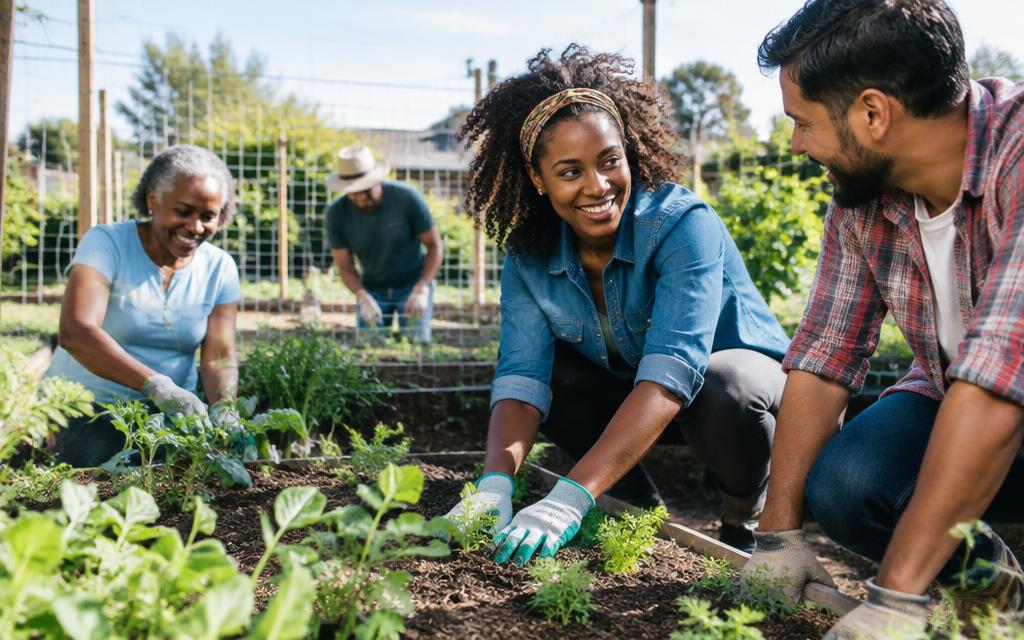
Community can begin close to home. Say hello to the person you often see walking a dog. Learn the name of a regular at the community garden. Ask a neighbor whether the building has a shared noticeboard. You do not need to turn every exchange into a friendship. Recognition itself can make a place feel less anonymous.
The reasons neighbors still matter often become clear in ordinary moments: a parcel kept safe, a borrowed tool, a quick check during bad weather. Offer help within your limits, and respect people's privacy. Avoid assuming that a neighbor wants company because they live alone. A friendly greeting and an open invitation are better starting points than repeated knocks or personal questions.
Make conversation small enough to begin
You do not need a clever opening line. Ask about the activity you are sharing: 'Have you taken this class before?' or 'Do you know where these supplies go?' Situational questions give the other person an easy way to answer. Listen for a detail you can return to next time. Remembering that someone was preparing for an exam can mean more than an impressive story.
Share a little about yourself too. If you only ask questions, the exchange may feel like an interview. You might mention that you are new to the area or trying the activity for the first time. Keep early disclosures at a level that feels comfortable for both people. Trust can grow through ordinary details before either person shares anything deeply personal.
Turn a pleasant encounter into another one
After a few good conversations, suggest something specific and low pressure. 'I am getting tea after class. Would you like to come?' is easier to answer than 'We should hang out sometime.' Give the person a way to decline without embarrassment. A warm no may simply mean they have other plans. If they repeatedly decline without suggesting another time, let the invitation rest.
If you recently relocated, these ideas for making friends after moving to a new city can help you build a routine instead of relying on chance. Keep invitations short and affordable at first. An hour in a public place is often a comfortable beginning. You are offering another point of contact, not asking someone to become your closest friend immediately.
Contribute without trying to earn your place
Helping can make a group easier to enter because you have a shared task. You might set out chairs, welcome a newcomer, or join a cleanup. Choose a job with a clear beginning and end. It is easier to chat while sorting books than while standing alone wondering where to look. Shared work can also show you whether people cooperate respectfully.
Be careful not to become the person who says yes to everything just to remain included. Belonging should not depend on free labor, constant gifts, or being available at all hours. Notice whether others thank you, share the work, and accept your limits. A group can need volunteers and still treat them well. Your usefulness is one part of participation, not the whole reason you deserve welcome.
Notice whether the group is safe and inclusive
A welcoming group explains its routines, makes room for questions, and handles differences without humiliation. Watch how members treat people who are new, quiet, disabled, or outside the group's usual background. A friendly welcome from one person does not erase a pattern of exclusion. You are allowed to leave a group that pressures you, mocks you, or ignores reasonable access needs.
Online communities can be valuable too, especially when local options are limited. Look for clear moderation, privacy controls, and sensible boundaries around money and personal information. Avoid sharing your address or financial details with strangers. If an online friendship moves offline, choose a public place and tell someone your plan. Taking precautions does not make the connection less real; it gives trust time to develop.
Keep old connections while building new ones
Looking for local community does not mean replacing everyone who already matters to you. A familiar voice can help you through the awkward early weeks of joining something new. Set a manageable rhythm for calls or messages rather than waiting until you have exciting news. The ideas in keeping old friendships alive can help you maintain those ties without making each conversation a major event.
At the same time, leave some room for your new surroundings. If every free evening goes to distant friends, local relationships may struggle to get started. You do not need an exact balance. Try protecting one recurring local activity and one regular contact with someone you already know. Different relationships can support different parts of your life without competing for the same role.
Give yourself a workable first month
Choose one recurring activity, attend when you can, and learn two names. In the next week, say hello again and ask one follow-up question. Later, offer a small invitation or volunteer for a short task. These steps may sound modest, but they give connection something concrete to grow from. Track what you tried rather than judging yourself by how close you feel after every visit.
There may still be lonely evenings. That does not mean the effort is failing. If loneliness is persistent, distressing, or affecting daily life, a counselor or support service may help alongside social steps. For now, aim for one place where your face becomes familiar and one person with whom conversation feels a little easier. Belonging often starts before it feels certain. It grows when those small moments have a chance to repeat.